Enchantment and (Re-)Wilding

Art, Contemporary Women Artists, enchantment, Outdoor life, rewilding
Having turned part of the garden over to wildflowers and seen significant increases in insect and bird population I am looking at the connections between these two concepts…

Exploring Enchantment: A Journey of Wonder and Connection

Enchantment is an elusive yet profoundly impactful experience that invites us to see the world through a lens of wonder and interconnectedness. 

Enchantment in Art and Life

In my art manifesto, I touch upon the concept of enchantment as a means to generate new and helpful myths for the future, working towards the re-enchantment of human beings and human actions⁠ suggesting that art can be a powerful tool to reconnect us with a sense of wonder and meaning.
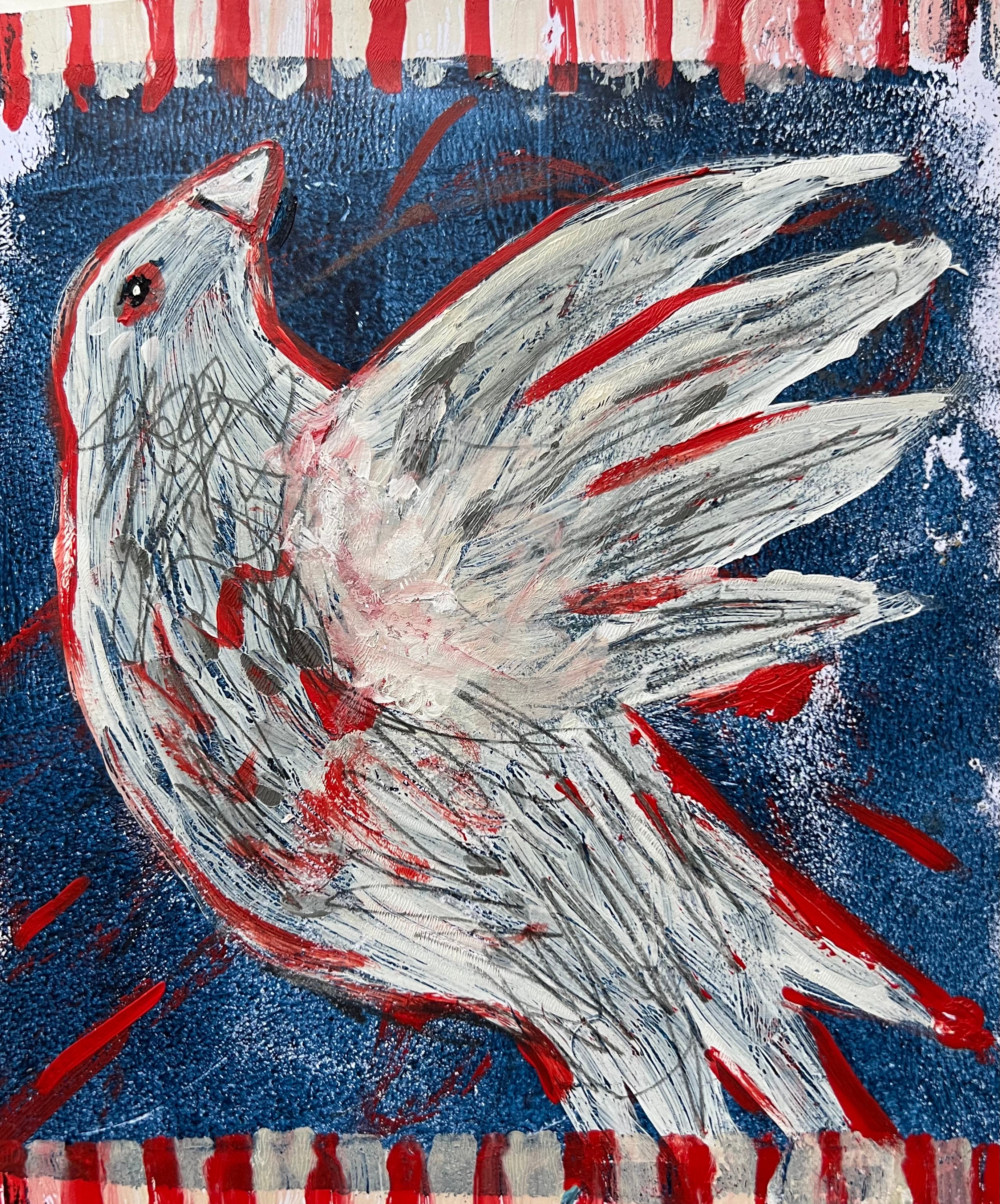
recent mono-print from a small project observing crows, ravens and corvids and investigating the mythology of them – this is Branwen the white raven from Wales – 2024

Literary Perspectives on Enchantment

Katherine May, in her book “Enchantment: Reawakening Wonder in an Exhausted Age” describes it as a small yet magnified wonder, a sense of fascination caught in the web of fable and memory. She emphasizes that enchantment relies on small doses of meaning and fascination, found only when we actively look for them. It is the ability to sense magic in the everyday, to channel it through our minds and bodies, and to be sustained by it⁠. She says:

“I don’t have words to describe what it meant to play with my moon shadow. Instead, I feel it in my body, a kind of physical wonder at what is there waiting for me when I stop to notice.” p.221

This perspective highlights the subtle and often overlooked aspects of enchantment that enrich our daily lives. My personal word for 2024 to hold in mind is “NOTICE” – it’s a helpful one – it invites slowing down, deep looking, investigating effects and affects on the self and sometimes recording in images or words.
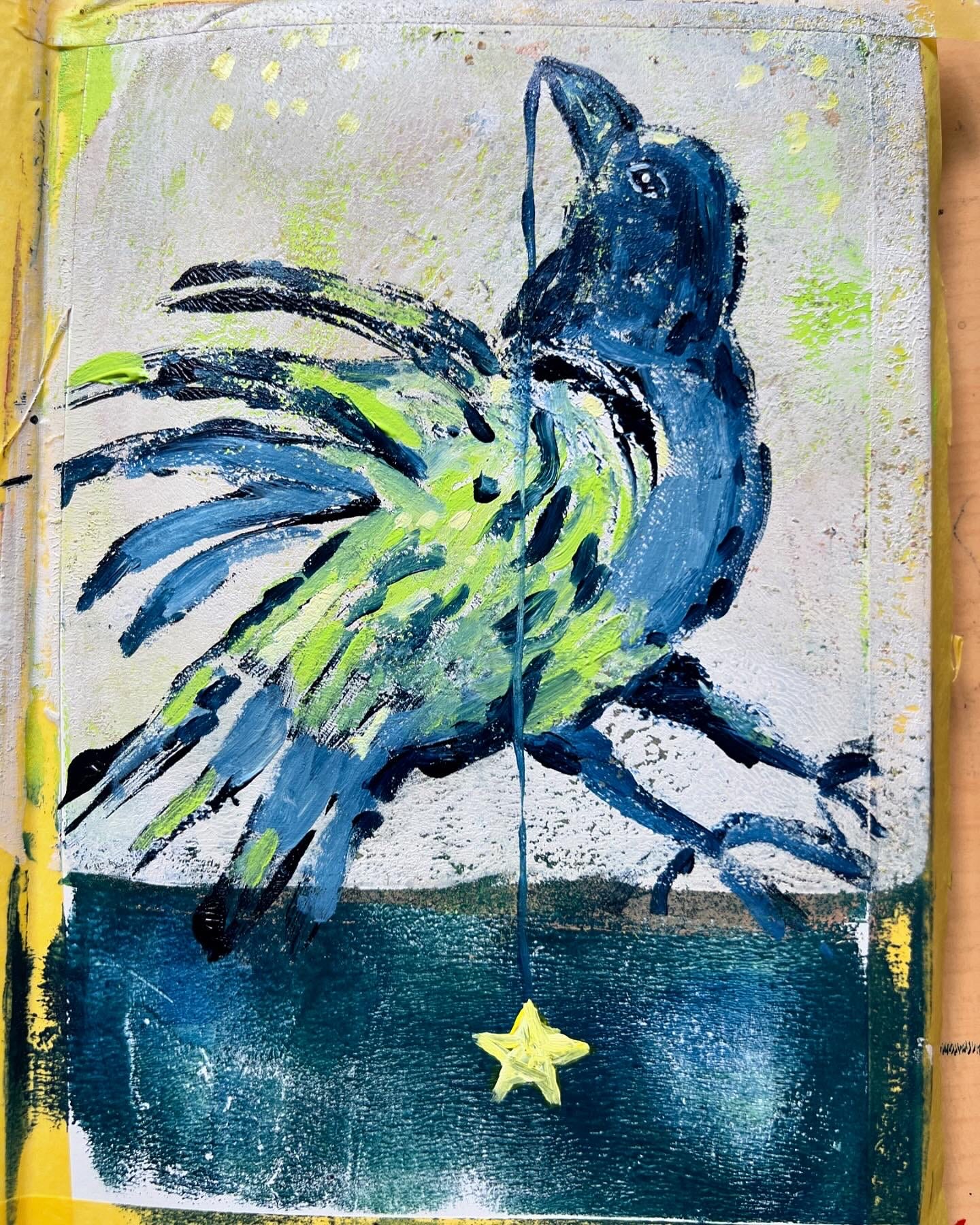
Raven monoprint – the legend goes that the crow pulled the light from the heavens to give to our world – 2024

Enchantment as a Way of Being

Sharon Blackie, writing on Substack, offers a definition of enchantment that is grounded in a vivid sense of belonging and participation in life. She describes the enchanted life as one that embraces wonder, engages the creative imagination, and is deeply embodied and ecological. It is about respecting the wisdom of the natural world, thriving on poetry, song, and dance, and living slowly and ethically. Enchantment, for Blackie, is about falling in love with the world anew and making a conscious choice to nourish our bruised psyches⁠. Her approach underscores the holistic and integrative nature of enchantment as a way to live fully and meaningfully.
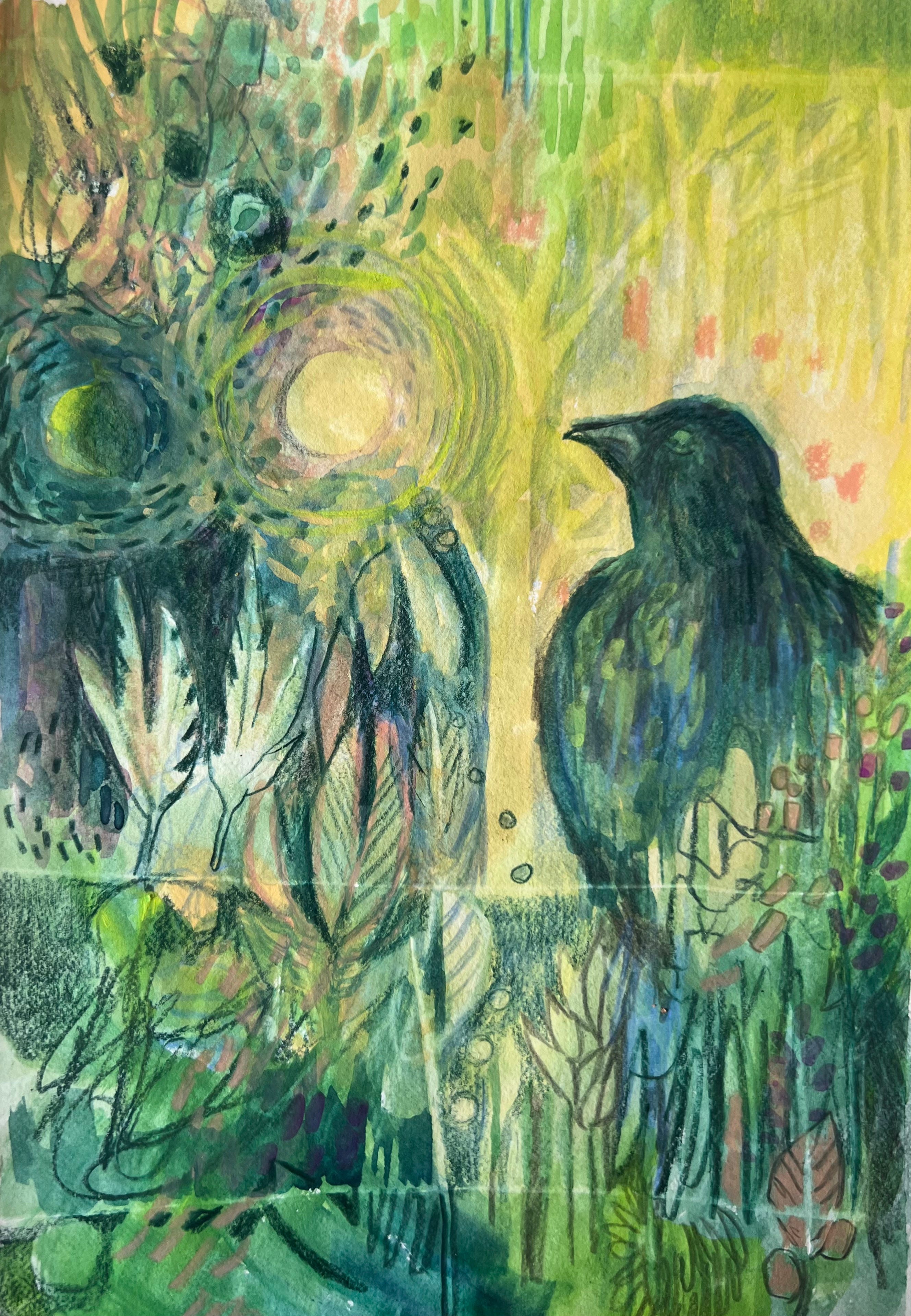
A small crow painting completed recently – integrating crows into the environment as our ecosystem – 2024

Personal Reflections

In my own practice, I find that the deliberate pursuit of attention, ritual, or reflection does not draw in anything external but rather rearranges what I already know to find new insights. This symbolic thought process offers a repository of understanding that can be triggered by everyday experiences, creating a physical sense of wonder when I stop to notice⁠. This personal reflection aligns with the broader themes of enchantment as a means of self-discovery and connection as well as cultivating a sense of awe as I described here in a piece about drawing outside and cultivating a sense of awe.
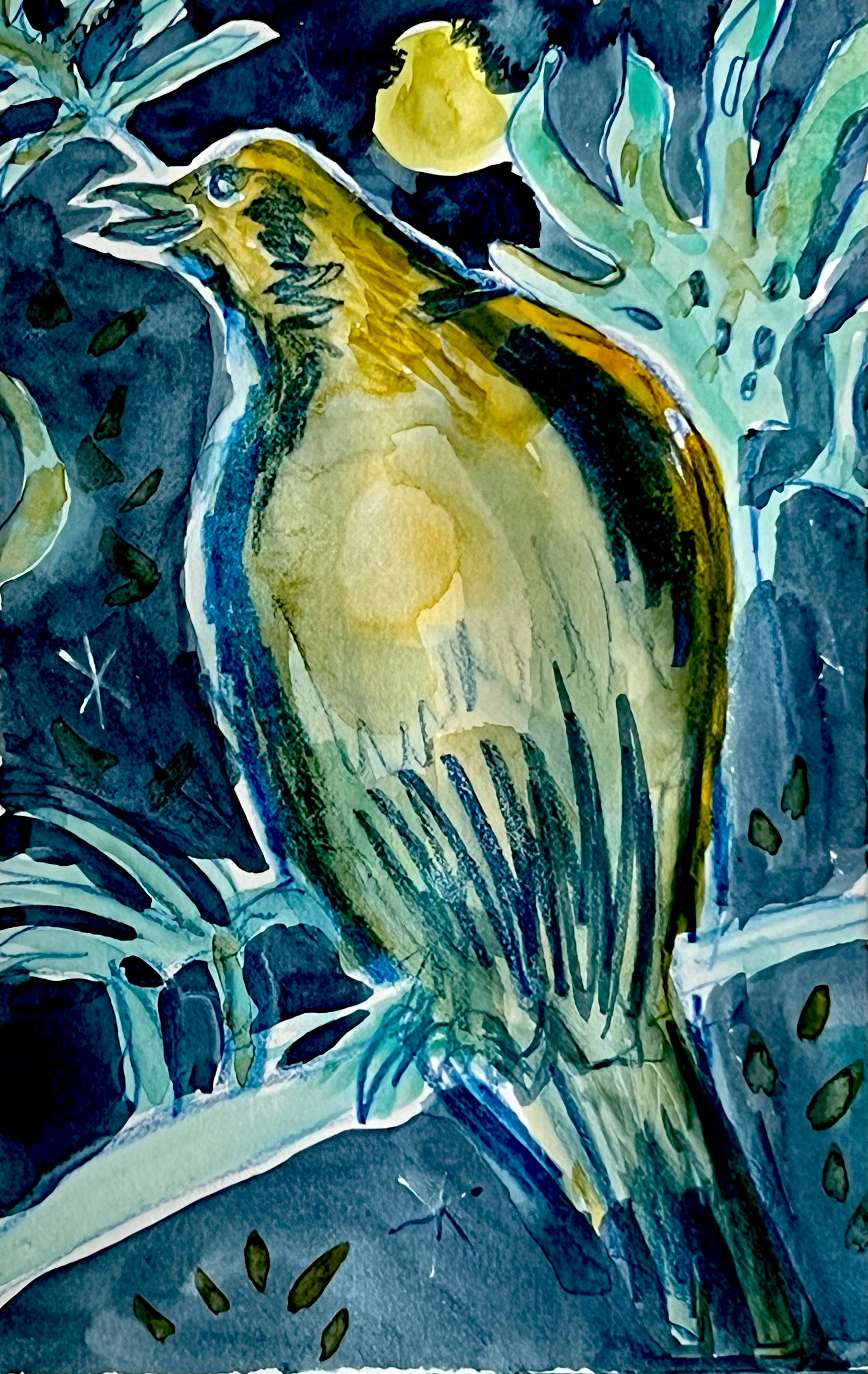
Recent watercolour made outside recording a bird singing in a tree in Loulé, Portugal – 2024

Are you ready to embrace the multifaceted experience of enchantment that invites us to engage with the world in deeper and more meaningful ways? Whether through art, literature, or personal reflection, it offers a path to reconnect with the wonder and magic inherent in our lives and that creates meaning for us – something we all need and something we can cultivate in noticing the weeds in the cracks in the pavement and our own plants in window-boxes, balconies and gardens or in walking in our neighbourhood or out in the wider countryside if we have access to that.
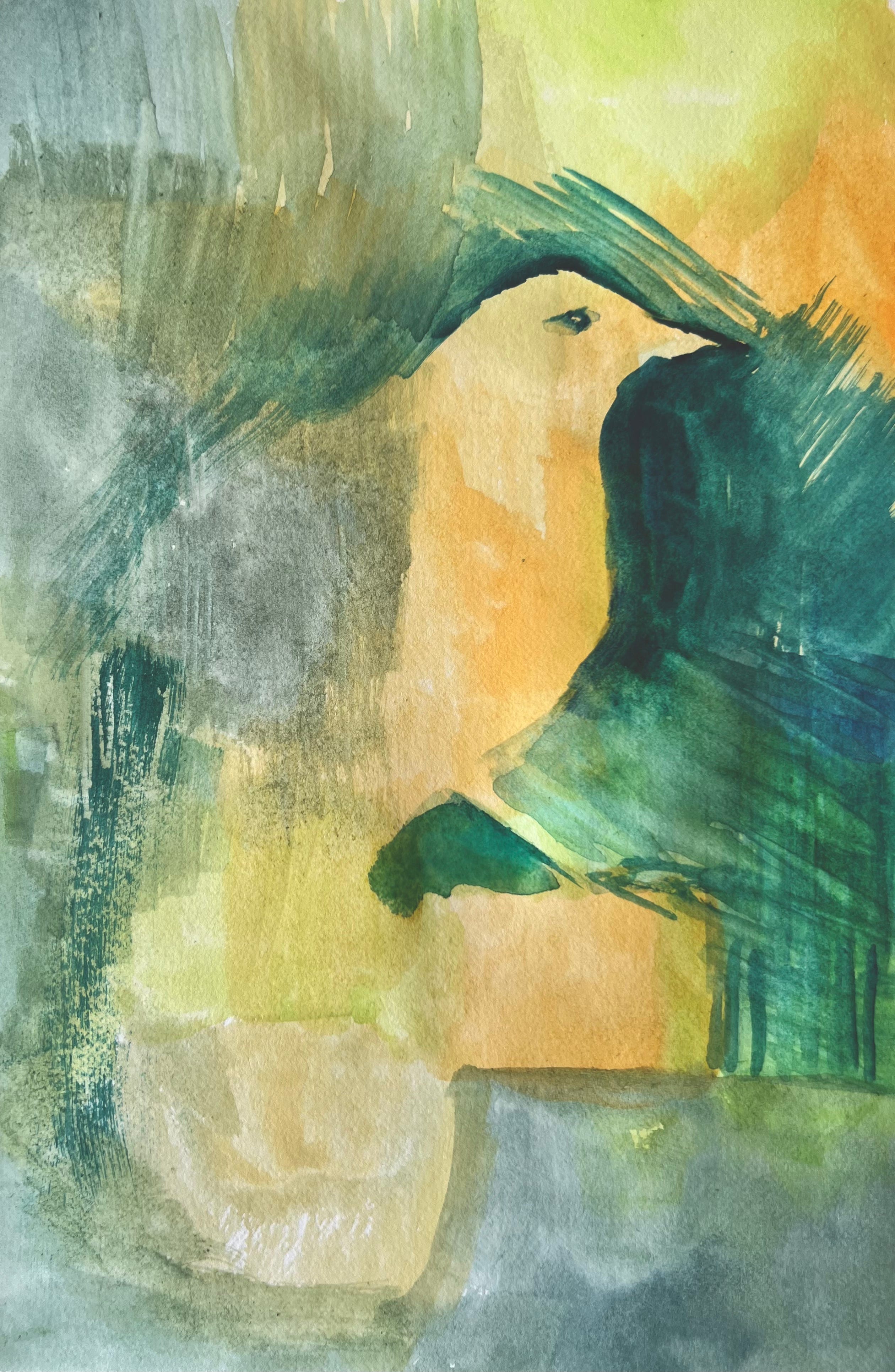
Watercolour observational sketch whilst listening to the birds in our local park – 2024

Wilding and Re-wilding (a film)

I am currently researching the concept of Wilding and Re-wilding and as part of this I am looking forward to seeing the film ‘Wilding’ next week which is on at smaller cinemas currently. (Local friends I am going to the Orbit in Wellington, Telford on Friday July at 2.30 – join me!!). Wilding tells the story of a young couple that bets on nature for the future of their failing, four-hundred-year-old estate. The young couple battles entrenched tradition, and dares to place the fate of their farm in the hands of nature. Ripping down the fences, they set the land back to the wild and entrust its recovery to a motley mix of animals both tame and wild. It is the beginning of a grand experiment that will become one of the most significant rewilding experiments in Europe.

In UK and Irish cinemas from June 14. Book tickets on www.WildingMovie.com.

To me this film will probably fit well with the notion of Enchantment – I will think about what the connection sparks.

Here’s a trailer:

I would love to know your views on wielding, re-wilding and the cultivation of Enchantment as re-enchantment!

That’s it from me – I’m off to draw in the garden! – a bientôt !!

love

Clare

Book Ref: May, Katherine (2024), Enchantment: Reawakening Wonder in an Exhausted Age, London: Faber & Faber

Dreamworks and the symbolism of birds

Art, Contemporary Women Artists, painting, philosophy

If I look at most of my paintings over the last few years they almost all feature birds. Do you remember in lockdown in 2020 how we, if we were fortunate to be able to, spent such a lot of time noticing birds in our gardens and parks, the drop in traffic noise, the stillness rarified by fear amplifying their song?

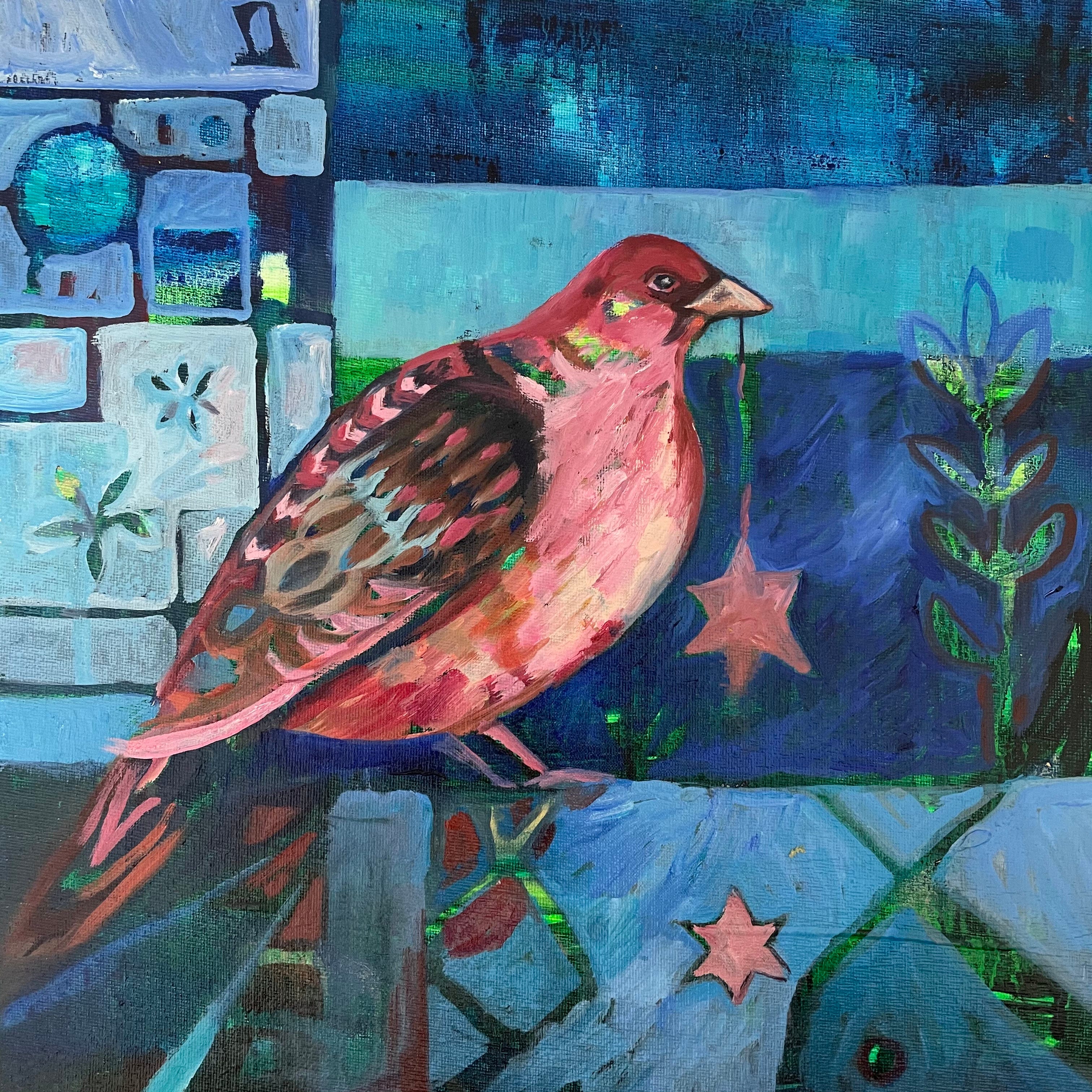
During that time I was struck by the activity in the garden of the birds and I began to paint them, almost sanctifying their presence by placing them against imaginary stained glass windows. They started to become symbolic of freedom and adaptability to me. There seemed nothing freer than a bird, able to go wherever it desired, able to adapt to the buffeting of winds and forces of nature.

Two oil paintings made by myself during lockdown 30 x 30cm


What was the freedom I craved?

  • at first it was definitely a ‘freedom from…’ away from the city, the griminess of urban decay, away from domestic duty, peace from interruptions of children, family, spouse, responsibility, obligation,time constraints and room for spacious thinking time and epic landscapes.
  • then I seemed to move on and the symbol came to stand for ‘freedom to…’ a feeling of wanting to run for the hills, to the wild open spaces of Wales, to the mountain tops and valleys, to quiet contemplative woodlands with ancient trees where I could feel rooted and amongst the ancients.
  • eventually, as I worked through these challenges I realised that the freedom lay in my head all along, I didn’t need to do a geographical relocation, because I learned to manage a work life balance and prioritise those activities (and non-activities) that kept me sane. I can go into those another time but as I realised who I really was, the shift came and the symbol stood instead for ‘transcendent thinking.’ The understanding of who I am, what I am and what I am here for became my work and fulfilled many of the needs I thought I had. The hills, wide open spaces, mountains and valleys, places of contemplation and rootedness were all within.

Jung and Symbolism

Along the way I started to become interested in the work of C.G. Jung, the father of psychoanalysis (after Freud with whom I would have a difficult relationship!). Jung was particularly interested in dreams and symbols developing a process he termed active imagination.

Jung’s ideas fed into psychotherapy, art therapy, dance and music therapy all part of the panoply of psychological release available today. All the time the idea, for him, was to allow us to get in touch with our true self and find the senses of purpose that we all need.

Jung himself was a mystic. He filled sketchbook after sketchbook with notes and drawings which he called the Black Books, which were eventually consolodated into the most beautiful work The Red Book, or Liber Novus which he stipulated should not be published until after his death. It is filled with astonishingly beautiful symbolic watercolours. Jung was a mystic but he kept it hidden from the scientific world for fear of being discredited in his field of psychoanalysis.

A page from Jung’s Black Books which represent his visionary imagination through writing and painting reflecting on his own life as well as the evolution of a theory of analytic psychology
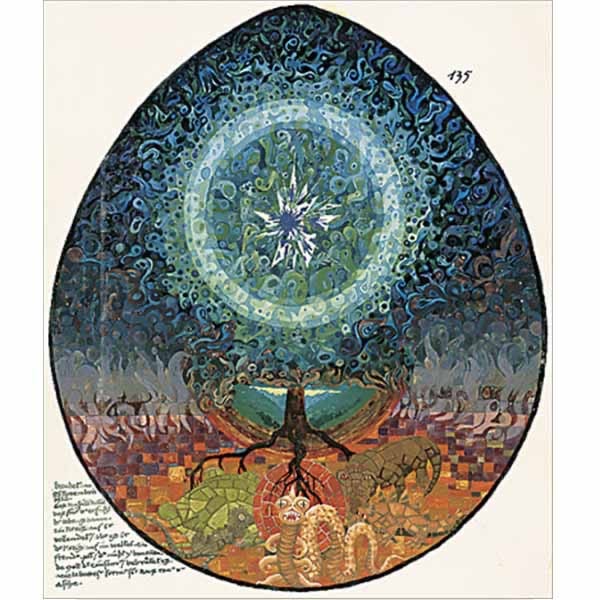
The Cosmic Egg from “The Red Book” by Jung

Jung also became fascinated by alchemy as a symbolic representation of individuation, the process of synthesis of the Self which consists mainly of the union of the unconscious and the consciousness. He said:

“Only after I had familiarised myself with alchemy did I realise that the unconscious is a process, and that the psyche is transformed or developed by the relationship of the ego to the contents of the unconscious”. 

Jung, C.G. (1989),Memories, Dreams, Reflections Vintage

Jung and Active Imagination

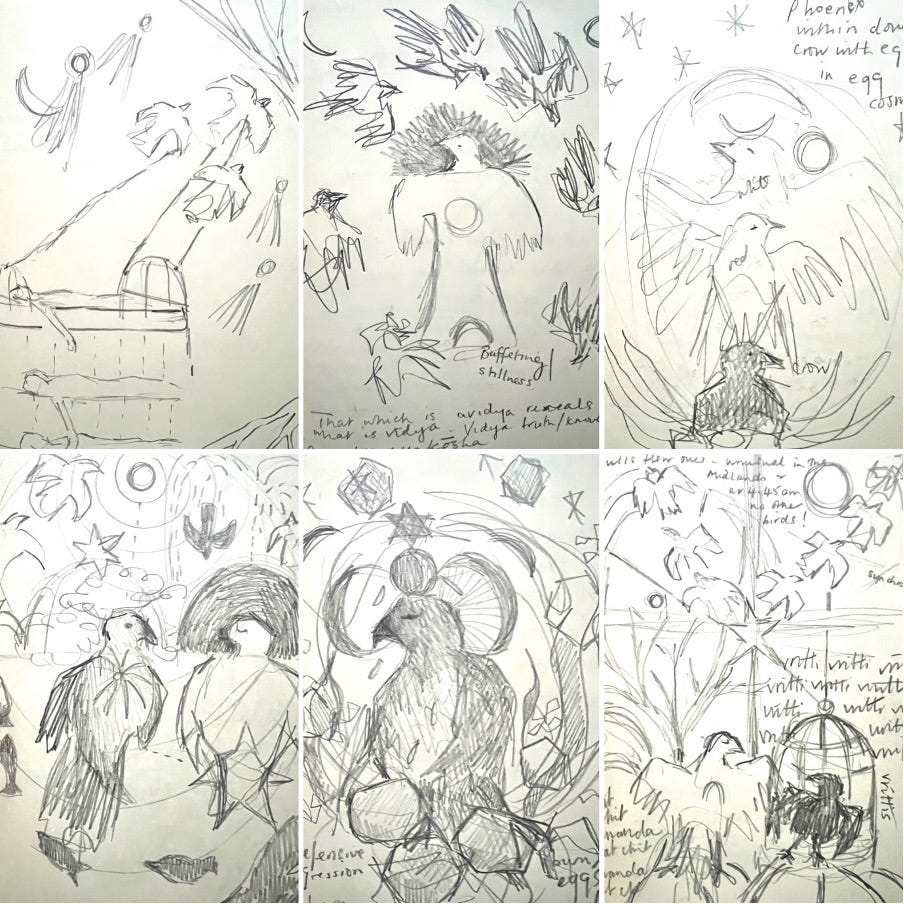
Jung developed a method of assimilation of unconscious contents through their experimentation as fantasies in the wakeful state which he termed ‘active imagination’. This can be used in or out of the therapeutic environment as a journey of possible self discovery on the path to individuation or self-realisation. I have played with this approach myself through recording my dreams, which are often of birds, and making more resolved work from the dream-sketches:

Examples of my dream-sketches
, ‘Dreamworks’, quick sketch later worked into, graphite and acrylic on paper, 20.5 x 15cm, 2023
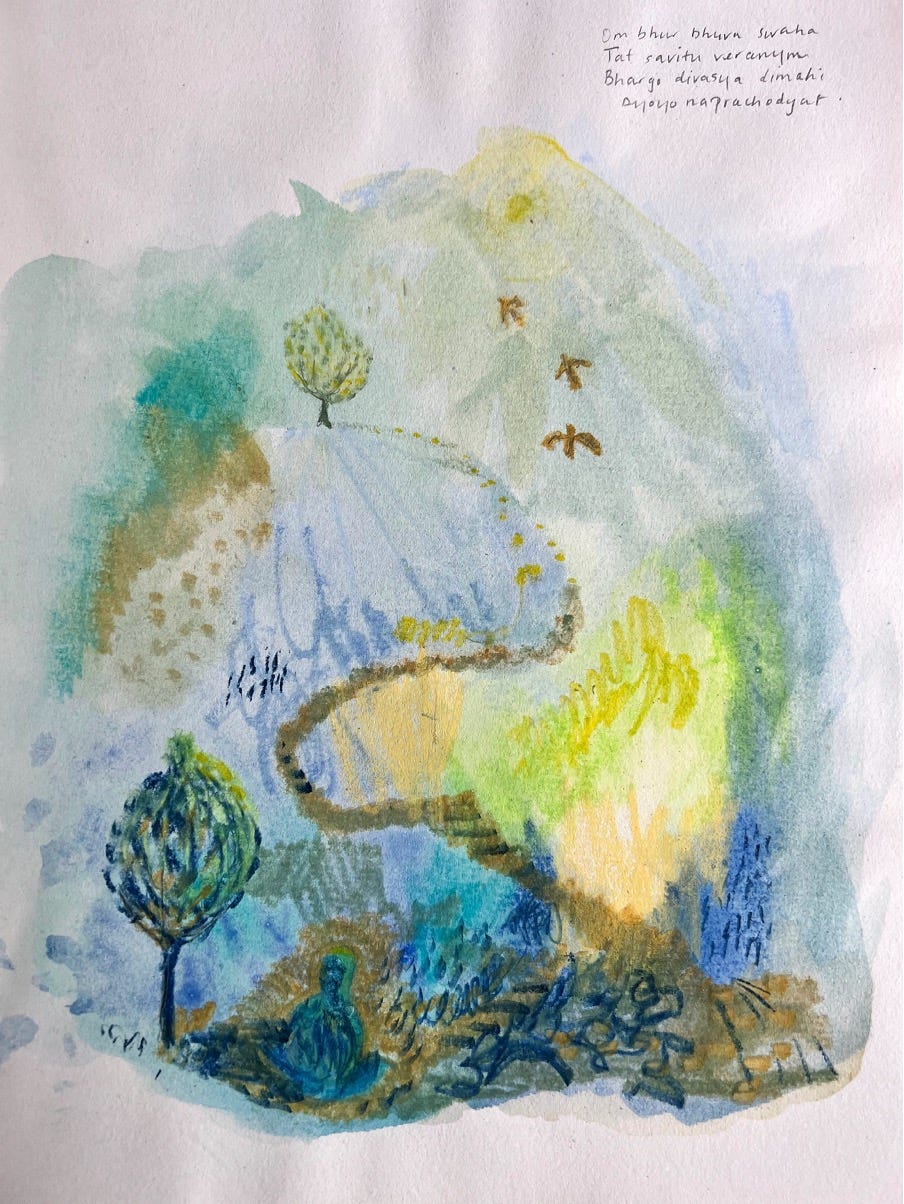
Dreamworks 4’, watercolour and Neocolour II sticks on paper, 21.5 x 28cm, 2023, writing in corner shows the ‘Gayatri Mantra’ which was in my mind on waking. This a mantra used in Hindu based meditation practices concerning invoking light.

Meta Thinking / Transcendent Thinking

This work has lead to further thought, for me, about the idea of being metahuman. To be metahuman means to move past the limitations constructed by the mind and enter a new state of awareness where we have deliberate and concrete access to peak experiences that can transform our lives from the inside out. I would count drawing, meditation and walking in nature as being peak experiences. Athletes and musicians often experience this state when performing particularly well. You might call it ‘being in the zone.’

Waking up, we learn, isn’t just about mindfulness or meditation. Waking up, to become metahuman, is to expand our consciousness in all that we think, say, and do. By going beyond, we liberate ourselves from old conditioning and all the mental constructs that underlie anxiety, tension, and ego-driven demands. Useful insight on this is Deepak Chopra’s ‘Metahuman: Unleashing Your Infinite Potential’ much of which draws from ideas from the Upanishads and Vedanta teachings of ancient India.

This I would say could be called transcendent thinking where transcendent doesn’t mean going above, but more working alongside from a different perspective.

The combination of meta thinking, ideas of alchemy and symbolism have resulted in some interesting and helpful personal development. Combining this with study of Sanskrit texts such as The UpanishadsThe Yoga Sutras and the Bhagavad Gita has made for an enlightening journey. Long may it continue!!!


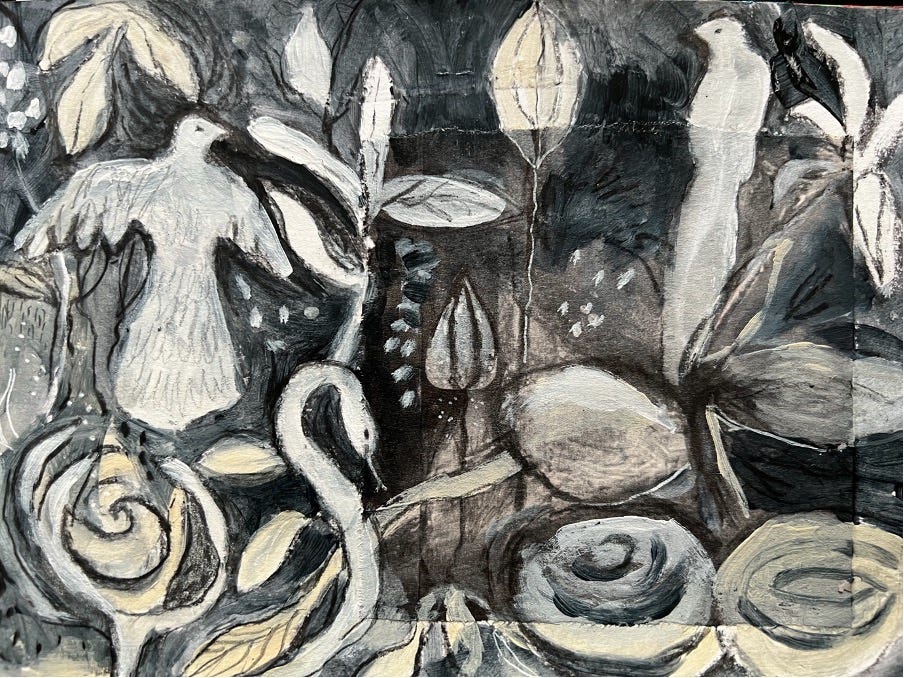
… and the birds continue… more paintings

At a recent three person exhibition, ‘Sprezzatura’ with Julia Burns and Rachel Magdeburg, I was able to show some of the paintings resulting from these dreams and imaginations. They are all available to see here (they are at a very good price for a VERY limited time – let me know if you would like to purchase) but here are a few:

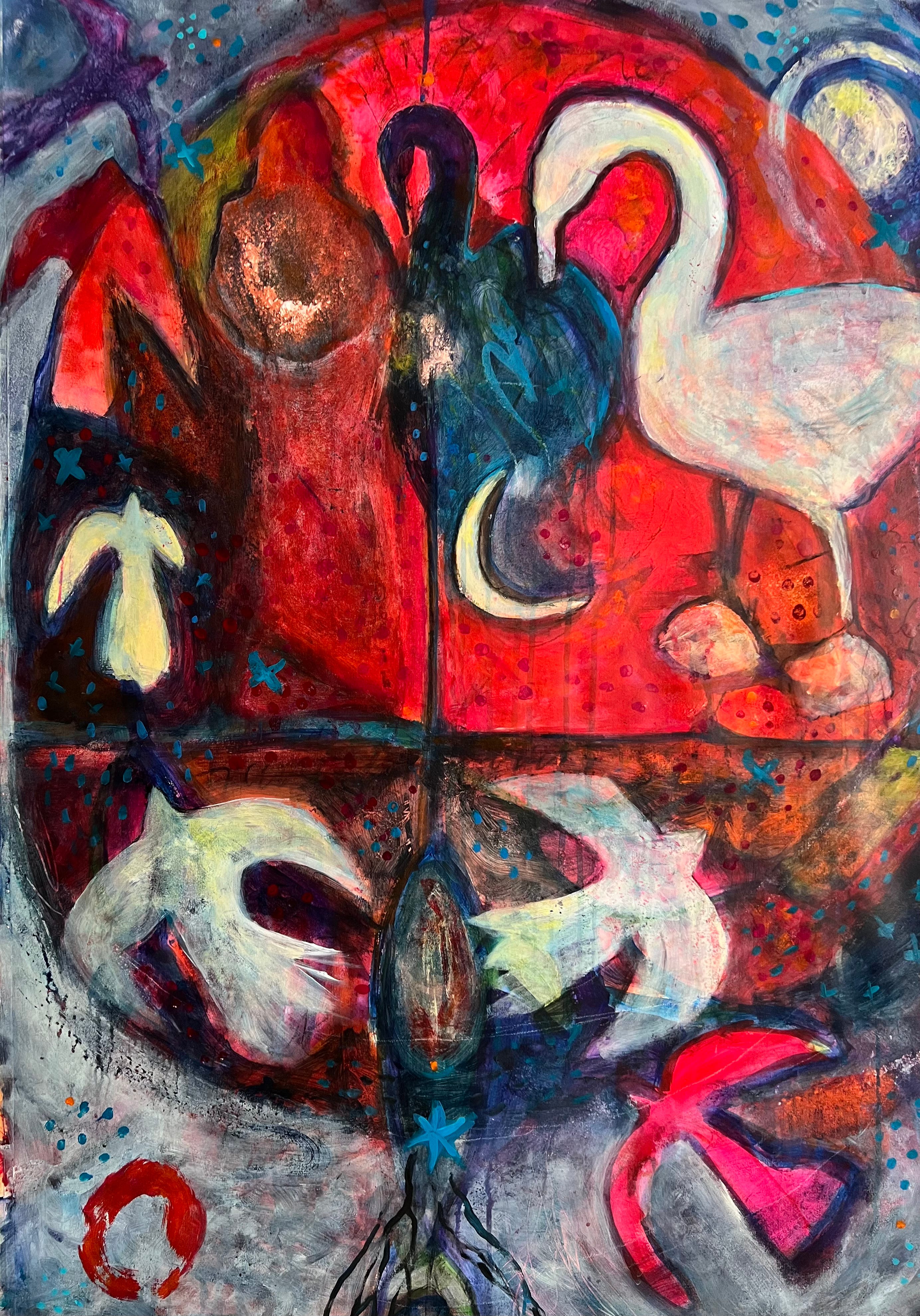
‘Axis Mundi’- Acrylic paint on paper – 71 x 120cm -£300
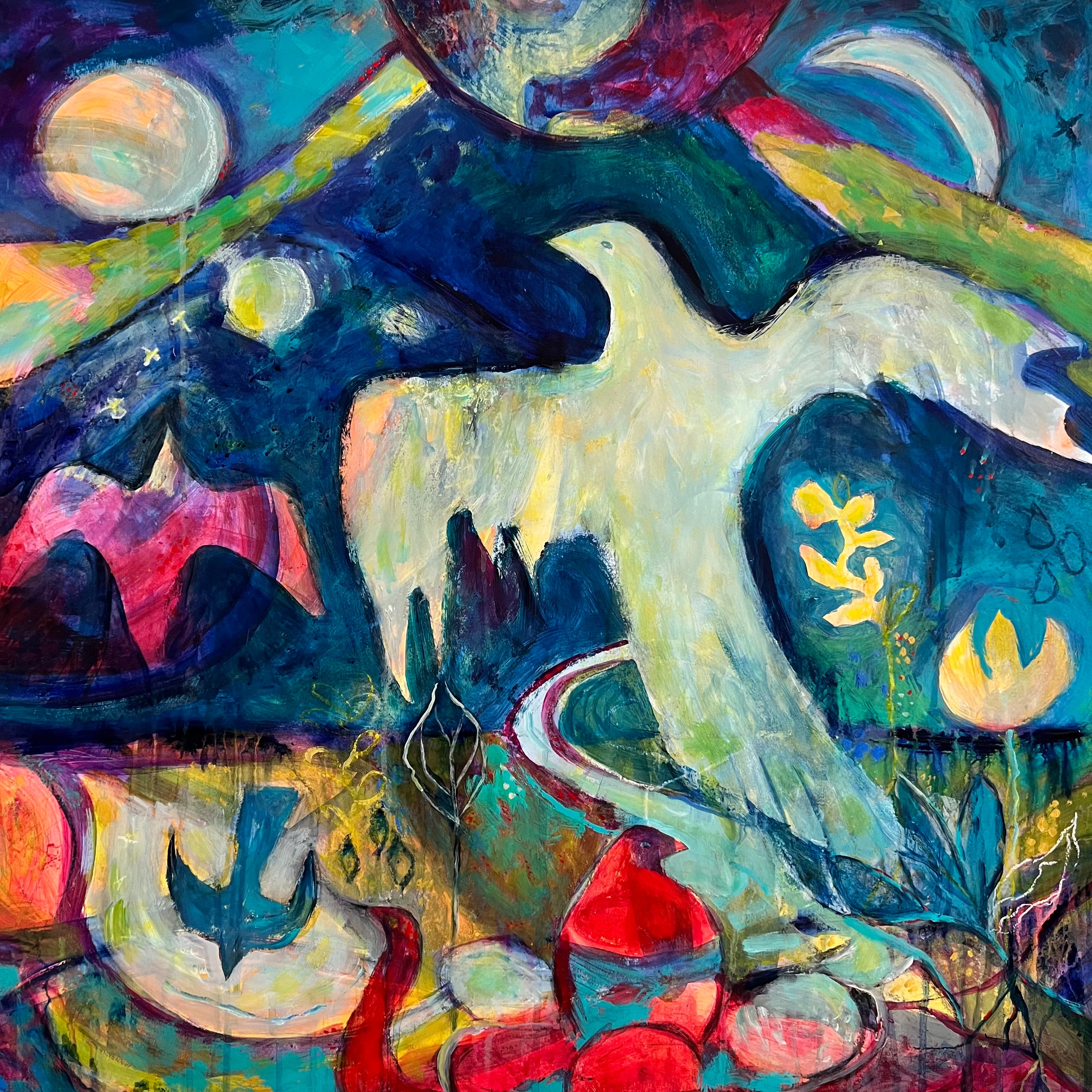
‘Om Kara’ – Acrylic paint on paper – 73 x 73 cm – £300
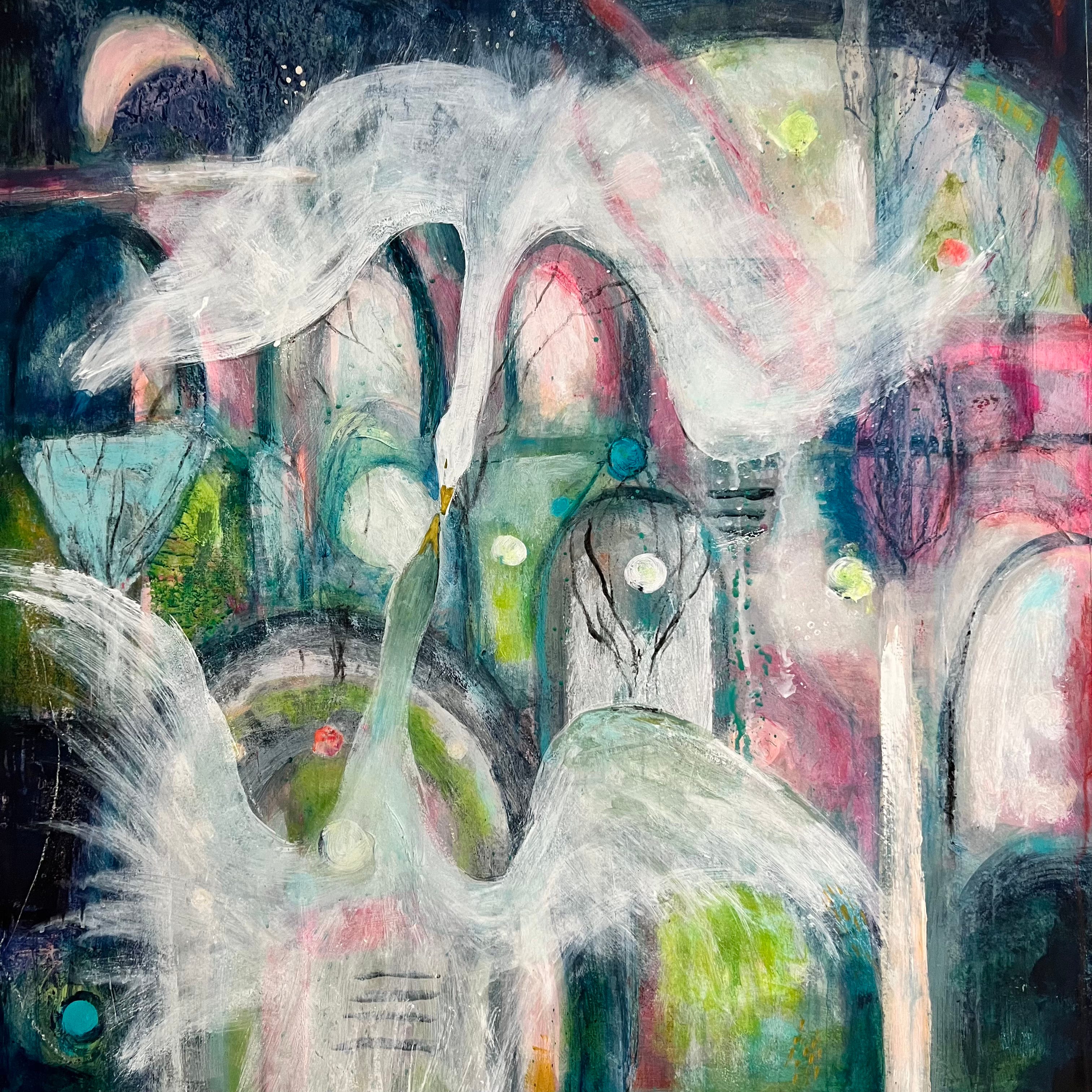
‘Thinly Veiled’ – Acrylic paint on paper – 72 x 74cm – £300

I have put the prices of these paintings here and there are more on the link page too – I unashamedly am selling these for funds for next year’s PhD fees and my travel related to drawing and painting in my beloved Campervan – a place for spacious thinking. Let me know if you would like to purchase. Postage is extra, at cost, and the work will be sent in a strong tube for you to choose a frame. Get a bargain whilst it lasts because through a gallery …. well, you know …..